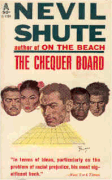
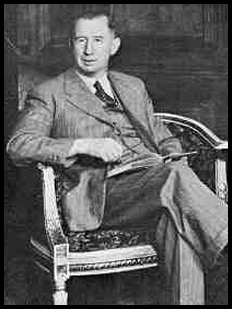
This is a glossary of some of the terms to be found in Nevil Shute's books. It is by no means exhaustive, but attempts to cover the following areas:
This glossary is the fruit of hard work and research by the following Shutists, some of whom did an in-depth analysis of specific books:
The terms are spelled as they were written in the books; the meanings are written mostly in UK English, with UK English spellings. For less experienced Shutists I have also included the book title acronyms often used in the Web site and the Newsletter. If you find any errors and omissions please send an email to
| B
|
Back To Top |
|
Term
|
Part of speech
|
Meaning
|
Category
|
| baa |
phrase |
Boden greets an officer from HMS Rodney, by saying "Baa". Once upon a time, when HMS Rodney was moored in Scapa Flow, a sailor finding no girls ashore resorted to a sheep. He was caught and duly punished but the word got about and thereafter whenever Rodney came into port sailors in other ships used to hail those in Rodney with "BAA" or "RAADDDNEEE" in a sheep like tone. This continued as long as Rodney was in commission even after the war, and is perhaps the reason why no ship has born that name since. Maybe the Admiralty are waiting until all those who remember have slipped their cables. |
Nautical |
| back |
verb |
When the wind changes in an anti-clockwise direction with respect to the compass. |
Nautical |
| back number |
phrase |
Something that is no longer viable or available. |
British |
| backstay |
noun |
A wire or rope that attaches the sides of a boat behind the mast to the mast head. Part of the rigging that keeps the mast vertical. |
Nautical |
| backward stagger |
noun |
An uncommon arrangement of aircraft design, where the top wing of a biplane is mounted more to the rear than the bottom wing. |
Aeronautical |
| bally |
adjective |
A mild swear-word, used in place of "bloody" by the more genteel. |
British |
| Bank of New South Wales |
noun |
Major Australian bank with branches in most large towns. Now called "Westpac". |
Australian |
| barrage |
noun |
Term used for the collective effect of a group of guns (artillery or anti-aircraft). |
British |
| basement |
noun |
The part of a house below ground level. |
British |
| bathing dresses |
noun |
Swimsuits, swimming costumes. |
British |
| battery |
noun |
Group of guns (artillery or anti-aircraft). |
Nautical |
| beam |
noun |
The breadth of a boat at its widest point. "Abeam", or "on the beam" means alongside the boat. Thus, "the buoy is just coming abeam" means that the boat is just passing the buoy, and "The land was half a mile on his beam" means that the boat was sailing parallel to the land, and half a mile away. |
Nautical |
| beam-ends, on her |
phrase |
Lying on her side, with one half of the boat underwater. |
Nautical |
| bear up |
phrase |
To turn a boat more closely to the wind - bearing off is the opposite. |
Nautical |
| beat (1) |
noun |
A course that requires you to sail into the wind. A dead beat requires you to sail directly into the wind (by beating/tacking), i.e. your destination is exactly upwind of your point of departure. |
Nautical |
| beat (2) |
verb |
Sail into the wind. A sailing boat cannot sail directly into the wind. At best it can manage a course which is some 35° off the wind direction. Thus, the boat is sailed in a zig-zag pattern as it is sailed alternately from the port to the starboard tack (to the left and then to the right of the wind direction). |
Nautical |
| below |
adverb |
Downstream. |
Nautical |
| bend |
verb |
Tie a rope to another rope or to an anchor. |
Nautical |
| beriberi |
noun |
Vitamin B deficiency which may be caused by a diet of polished or old rice. |
Other |
| Bessoneau |
noun |
A canvas covered aircraft hangar. |
Aeronautical |
| bill of health |
noun |
A document required in the period of the book when sailing internationally. It was granted by the authorities at the port of departure to indicate that no-one on the boat was sick with any notifiable disease when it sailed. |
Nautical |
| bin |
noun |
Arabic. Son of -. |
Other |
| binnacle |
noun |
Housing for the compass. Normally made of wood to avoid that the presence of metal influences the compass needle. |
Nautical |
| binti |
noun |
Arabic. Daughter of -. |
Other |
| Blackburn Bluebird |
noun |
A small British civilian aircraft. |
Aeronautical |
| blind flying panel |
noun |
Instruments used when flying in bad weather. In NS's time, they helped the pilot determine how much the aircraft is flying off a straight and level course, by using gimbals to visualize an artificial horizon. In modern times radar and other electronic aids are used to show the position and attitude of the aircraft. |
Aeronautical |
| blipping |
noun |
A method of slowing early aircraft engines by intermittently turning off the ignition. |
Aeronautical |
| block |
noun |
A structure that contains one or more sheaves, or pulleys. Used in sets typically of two blocks with one or two wheels each and rope passing backwards and forwards around the wheels; the system thus created allows one man to lift an object much heavier than he could manage without the blocks. |
Nautical |
| blowed |
verb |
A very mild imprecation, probably closest to "damned". "Blowed if I know" means "I haven't any idea". "Well I'll be blowed" means "What a surprise!" or "How amazing", or even "Cool!". |
British |
| blower |
noun |
Slang term for a telephone or radio. |
British |
| blue cattle dog |
noun |
Cattle dog bred in Queensland with grey coat mottled with black. Also called "blue heeler" from its habit of nipping recalcitrant beasts above the hoof. |
Australian |
| boat, in the same |
phrase |
See "in the same boat". |
British |
| bob |
noun |
Slang for a shilling - one twentieth of a pound sterling. A shilling contained twelve pence, and was worth 5 new pence. |
British |
| boilersuit |
noun |
British term for coveralls. |
British |
| Boley watchmaker's lathe |
noun |
A watchmaker's lathe generally describes a very small, high-precision lathe which is not usually equipped with the normal screw- or shaft-feed for the carriage. Since the parts to be made are generally very small, the only lateral feed provision is usually contained within the traversing carriage of the lathe. Watchmaker's lathes are also generally equipped with some form of precision collet chuck, rather than the more common 3- or 4-jaw chuck, which is generally too large and inaccurate for horological work. Some examples of the Boley product may be seen
here . |
Other |
| bonza |
noun |
Australian slang. So obsolete as to be quaint. Very good, excellent. |
Australian |
| boom (1) |
noun |
Part of a boat's rigging - the horizontal wooden or metal pole that is attached at one end to the mast and which forms the baseline of the sail. |
Nautical |
| boom (2) |
noun |
A buoyed cable stretched across a harbour mouth or narrow passage, to prevent the entry and exit of boats. |
Nautical |
| boom (3) |
noun |
Upright sticks marking the line of a channel - used in quiet waters instead of channel buoys. |
Nautical |
| boong |
noun |
Possibly Australian Aboriginal origin. Aboriginal, coloured person. Now a pejorative term. |
Australian |
| Bovril |
noun |
A beef-flavoured paste that one mixed with hot water to make a warming, nourishing drink. |
British |
| bow |
noun |
Front of a boat - also bows. Pronounced "ow", not "oh". |
Nautical |
| box and cox |
phrase |
Used in the book's context to refer to the sharing of one aeroplane between more than one pilot. It originates from the naval habit of saving space by supplying only one bunk or hammock for two sailors who would be on different watches, and thus never need it at the same moment. From the title of a farce by J. M. Morton (1811-1891), in which two characters (Mr Box and Mr. Cox) unwittingly share an apartment, one by day, the other by night. |
British |
| brat |
noun |
A small child who is being a nuisance. Sometimes used to refer generically to all small children, in a slightly pejorative way. |
British |
| bridge, cross that |
phrase |
See "cross that bridge". |
British |
| Brisbane |
noun |
Capital city of Queensland, in the south east corner of the state. Named for the sixth governor of New South Wales. |
Australian |
| brought up |
verb |
Stopped. |
Nautical |
| BTBS |
acronym |
Beyond the Black Stump |
Other |
| bulkhead |
noun |
A transverse structure in a boat, that maintains the hull shape and prevents the boat from collapsing under the water pressure. |
Nautical |
| bull |
noun |
See "outer". |
British |
| bulwarks |
noun |
The outer parts of the deck. In larger boats the bulwarks would be a handrail or other superstructure preventing one from falling overboard. In a smaller boat they might consist of a partial handrail, say at the bows, plus the various parts of the rigging that are attached to the outermost part of the deck. |
Nautical |
| buoy |
noun |
Floating object, anchored to the bottom; used to mark channels, tie up boats, etc. |
Nautical |
| burgee |
noun |
A small flag flown at the masthead, sometimes decorated with a motif appropriate to the name of the boat, its port of origin, the yacht club its owner belongs to etc. It also has a practical purpose, to help determine wind direction. |
Nautical |
| burglary |
noun |
Theft. |
British |
| Burns Philp (Burns, Philp & Company Limited) |
noun |
Merchants and traders both in the western Pacific Ocean and in northern Queensland. Also known as "Bloody Pirates". |
Australian |
| Bush Brothers |
noun |
Travelling Anglican ministers in north and western Queensland. Active in the Townsville diocese, which would have included Willstown. |
Australian |
| button switch |
noun |
The ignition switch to "blip" the engine was usually a button on the control stick. Blipping (q.v.) created a fire hazard, so was used only when necessary. |
Aeronautical |
| C
|
Back To Top |
|
Term
|
Part of speech
|
Meaning
|
Category
|
| C of A |
noun |
Certificate of Airworthiness - An annual maintenance inspection procedure on private aircraft. |
Aeronautical |
| cabin (aero.) |
noun |
The part of an aeroplane where the passengers or the cargo is carried. |
Aeronautical |
| cabin (naut.) |
noun |
The enclosed part of a small yacht, including the sleeping, cooking and dining areas. In a larger boat, the term is used to refer to any room used to sleep in (e.g. captain's cabin). |
Nautical |
| Cairns |
noun |
Small city on north coast of Queensland, about 1600 km (1000 miles) north of Brisbane. It has been a tourist jump-off for the Great Barrier Reef for decades. |
Australian |
| Canberra |
noun |
Political capital of Australia. |
Australian |
| canvas water-bag |
noun |
Prior to the arrival of plastic containers, the water-proofed canvas water-bag was used to transport water by hand. |
Nautical |
| Captain |
noun |
Royal Navy rank: responsible for a ship. |
Other |
| carried away |
verb phrase |
To be removed from a boat by the wind or sea (inanimate objects only). |
Nautical |
| castor oil |
noun |
Lubricating oil used in rotary aircraft engines. |
Aeronautical |
| cathode ray plug indicator |
noun |
Same as engine analyzer. A device which allows diagnosis of engine performance while in flight. Found on the last few generations of large propeller driven aircraft. |
Aeronautical |
| cats and dogs, raining |
phrase |
See "raining cats and dogs". |
British |
| CC gear |
noun |
A device to prevent a machine gun from hitting the blades of a propeller, as it fires through the propeller's path. Named for its inventors, Constantinesco and Colley. |
Aeronautical |
| cellon |
adjective |
A transparent synthetic resin, used frequently in the 1930s and 1940s for transparent aeroplane parts (cockpit cover, bomb-aimer's blister, gun turrets, etc.). Later replaced by Perspex or Plexiglas, which did not yellow with age. |
Aeronautical |
| chain locker |
noun |
The area under the foredeck where the anchor chain is stored when the anchor is not in use. |
Nautical |
| chartered accountant |
noun |
An officially qualified accountant, who has passed public exams to receive his or her "charter". |
British |
| chihike |
verb |
A reliable slang dictionary gives: "Various meanings, incl. a salutation, a noisy disturbance, jeering, banter, tease, make fun of". I grew up thinking it just meant "making gentle fun of in a noisy way", and this seems to fit the NS contexts. We pronounced it "chai-aik"; the dictionary gives a variety of spellings and pronunciations. |
British |
| chocks |
noun |
Blocks, usually wood, placed around the wheels to prevent aircraft movement on the ground. |
Aeronautical |
| chunda |
verb |
Australian slang. Vomit. |
Australian |
| circuit |
noun |
A standardized path over the ground which an airplane takes when operating near a runway and preparing to land. Same as traffic pattern. Also any path over the ground returning to the same point. |
Aeronautical |
| circuits and bumps |
phrase |
Practicing repeated take-offs and landings. Same as "touch and goes". |
Aeronautical |
| cistern |
noun |
The plumbing in British houses of NS's period was not connected directly to the water mains for all purposes. A house would normally have a cold tap in the kitchen, and maybe another outside the house, that would contain water direct from the mains. All other cold taps in the house would be connected to a tank placed normally in the roof space, which would be maintained full by a ball-valve that regulated the entrance of water from the mains. A hot-water heater (boiler) would also be connected to the tank. Thus, water would issue by gravity alone from all hot taps and those cold taps not attached to the mains. This system was developed during a period when it was very difficult to maintain a regular mains pressure, and is still widely in use. The term cistern was used to refer both to the main cold-water tank, and to the smaller tank that provided the water to flush the toilet. |
British |
| clamped down |
phrase |
The weather has become bad. |
Aeronautical |
| Clerget |
noun |
Make of aircraft rotary engine. |
Aeronautical |
| Cloncurry |
noun |
Town in North West Queensland. Once a copper mining area, now mostly engaged in supporting beef cattle industry of the surrounding semi-arid region. A stopover at one time on the Qantas airline route from Sydney to London. Still known as "The Curry". |
Australian |
| coal |
verb |
To take on solid fuel. |
Nautical |
| Cobb and Co. |
noun |
Australian coaching, transport and mail contracting company founded in 19th century by an American immigrant, Mr. Freeman Cobb and his brothers. Used an American type coach with longitudinal springs. |
Australian |
| cobber |
noun |
Australian slang. Quaintly obsolete. Equivalent to "Mate" or the American "Buddy". |
Australian |
| cockpit (aero.) |
noun |
The part of a fighter plane where the pilot sits. |
Aeronautical |
| cockpit (naut.) |
noun |
The rear part of a yacht from which it is steered. |
Nautical |
| colours, to come to the |
phrase |
To enlist - the "colours" means the flag of the regiment or other branch of the services. |
Nautical |
| Commander |
noun |
Royal Navy rank: responsible for navigation. |
Other |
| Commodore |
noun |
Royal Navy rank: responsible for a small fleet. |
Other |
| compass and log |
phrase |
Navigating by "dead reckoning", i.e. by steering a compass course calculated from a map (chart), taking into consideration current winds and currents, and measuring one's progress along the course by using a log (q.v.). |
Nautical |
| compass variation |
noun |
A compass does not point due North, but to the North Magnetic Pole, which is, in 2003, at Lat 82oN, Long 112.4oW. Depending where you are in the world, you need to adjust any compass bearing by applying the local "variation". In the UK area in the 1930s the North Magnetic Pole was about 11oW of true North. Currently, the variation is less than 6oW, and is reducing each year, as the North Magnetic Pole is moving towards the true North Pole at about 40kms per year. |
Nautical |
| Comper Swift |
noun |
A small British civilian aircraft. |
Aeronautical |
| consommé julienne |
noun |
A clear soup made of strained meat or vegetable stock, served hot with long thin strips of vegetables. |
British |
| Constellation |
noun |
Lockheed "Constellation" Four-engined, propeller-driven long range airliner of the 1940s and 1950s. Notable for a triple-rudder tail. |
Aeronautical |
| contact |
phrase |
Turning on the engine's ignition switch to start. Also the command to do so given by the person turning the propeller. (See "swung the propeller"). |
Aeronautical |
| conveyance |
noun |
The legal document that transfers the ownership of a house from one party to another. |
British |
| cop an outer |
phrase |
See "outer". |
British |
| Corporation |
noun |
The generic title given to the services of local government. Although the word comes from the title "City Corporation", if some other body is responsible for a service, such as a County Council, that other body will often still be referred to as "the Corporation". |
British |
| counter |
noun |
The aft part of a ship above the water line and immediately in front of the stern itself. |
Nautical |
| cow, a fair |
phrase |
Obstinate, difficult, miserable. |
Australian |
| cowling |
noun |
The light weight structure enclosing an aircraft engine, made to smooth out airflow. Normally easily opened or removed. |
Aeronautical |
| crook |
adjective |
Bad, ill. |
Australian |
| cross sea |
phrase |
When the wind and the current/tide are at (more-or-less) right angles to each other. |
Nautical |
| cross that (bridge or ditch) when we come to it |
phrase |
A potential or latent problem will be dealt with when it becomes a real problem, not before. |
British |
| CSIRO |
noun |
Commonwealth Scientific and Industrial Research Organisation. Research groups funded by the Australian federal government. |
Australian |
| curling-irons |
noun |
Used for curling hair before the days of electric hair-curling tongs. The principle was the same in that you heated the curling-irons over an open fire and wrapped the hair around them so that it curled. |
British |
| cutter |
noun |
A very popular type of yacht with one mast, normally capable of being sailed by a crew of two. |
Nautical |
| D
|
Back To Top |
|
Term
|
Part of speech
|
Meaning
|
Category
|
| D.7 |
noun |
A high quality WWI German fighter aircraft, built by Fokker. |
Aeronautical |
| Dakota |
noun |
English name for the DC3 (q.v.); origin unknown. |
Aeronautical |
| Darwin |
noun |
City on the north west coast of the Northern Territory. Named for Charles Darwin, English naturalist. Stopover on the old Sydney - Brisbane - Cloncurry - Darwin - Singapore airline route. |
Australian |
| DC-3 |
noun |
Douglas DC3, also known as the "Gooney Bird" Twin-engined, all-metal transport aircraft introduced in the 1930s. Generally called "DC3" in Australia and the USA, Dakota in England. |
Aeronautical |
| DC6B |
noun |
One of the last large 4-engined propeller passenger aircraft. |
Aeronautical |
| dead beat |
noun |
See "beat". |
Nautical |
| dekko |
noun |
British/Australian slang. More or less obsolete. Inspection, glance. |
Australian |
| dicey |
adjective |
Risky. |
British |
| dinghy |
noun |
A small rowing boat used to transfer between a moored boat and the shore or another boat. Normally towed behind the yacht or carried upside down on the cabin roof or the foredeck. In more luxury yachts, carried on derricks at the stern. |
Nautical |
| dinkie-die |
adjective |
Not quite obsolete Australian slang. Genuine, the truth. |
Australian |
| district nurse |
noun |
In England in this period, before the advent of the National Health Service, each locality was supplied with a district nurse who gave health advice, and visited known sick people who lived on their own, or who couldn't afford to pay for a private nurse, to ensure they were getting the proper care. |
British |
| ditch |
verb |
Nautical and aeronautical slang for the sea; a plane that comes down on to the sea "ditches". |
Nautical |
| ditch, cross that |
phrase |
synonym for cross that bridge (q.v.). |
British |
| Dolphin |
noun |
A type of British fighter aircraft in WWI. |
Aeronautical |
| dope |
noun |
A type of paint often used on aircraft, which was, and still is called "dope". In particular for early aircraft, which were built as a wooden frame over which was stretched a material, such as canvas. Applying "dope" to the canvas caused it to shrink tight onto the frame. |
Aeronautical |
| dourly (adv) |
adjective |
Silently ill-humoured; gloomy. |
British |
| Dragonfly, Dragon |
noun |
de Havilland light and medium aircraft used all over the world. In Australia, used mainly in Queensland and the Northern Territory, possibly assembled by Qantas at Longreach in the 1930s. |
Aeronautical |
| draw up |
verb |
To come to a halt. |
British |
| drawer, top, out of the |
phrase |
See "top drawer". |
British |
| drawing pins |
noun |
Thumb tacks. |
British |
| drawing-room |
noun |
Room furnished with easy chairs and divans, sofas or settees where the family could sit and read, listen to the radio, play the piano or other musical instruments, entertain guests, etc. The name comes from "withdrawing room", a room in wealthier houses of the previous century to where the women "withdrew" after dinner, leaving the men in the dining room to smoke cigars and drink brandy. By the time NS was writing, his heroes would no longer be observing these practices, but the name for the room had remained in use, albeit a little shortened. |
British |
| dual (take out the) |
noun |
Remove a second control stick to make more room in the cockpit. The second stick is used when an aircraft is used as a trainer, and both instructor and trainee pilot have interconnected control sticks. |
Aeronautical |
| dumb-bell |
noun |
Used in weight-training to strengthen the muscles of the arms. Consists of a short metal bar joining two weights. |
British |
| dunnage |
noun |
Personal baggage. |
Nautical |
| F
|
Back To Top |
|
Term
|
Part of speech
|
Meaning
|
Category
|
| fair |
adjective |
A fair wind or tide is one that helps you on your way, a foul wind or tide is against you, and makes your passage much slower, or may at times actually prevent you from sailing. |
Nautical |
| falling tide |
phrase |
See "tide". |
Nautical |
| fathom |
noun |
A measure of the depth of the sea, equivalent to 6 feet (1.83 metres). |
Nautical |
| finger trouble |
phrase |
British slang for doing something stupid. It stems from the phrase "get your finger out", which is said if someone is slow at doing something - the connotation is sexual! |
British |
| Flags |
noun |
Nautical nickname for the flag-lieutenant, an admiral's aide-de-camp. |
Nautical |
| flaps |
noun |
Moveable panels on the rear of a wing used to aid in flying slowly. |
Aeronautical |
| flare-path |
noun |
For use at night, the edges of the runway would be marked by a double line of small fires. These were often just metal containers of oil, that could be set alight when the aeroplanes needed to take-off or land. |
Aeronautical |
| flooding tide |
phrase |
See "tide". |
Nautical |
| floor |
noun |
In Britain, as in most of Europe, you enter a house at the ground floor and go up stairs to the first floor, and then on to the second, etc. Thus, the last floor in a building is always called the n-1th floor, where n is the total number of floors. In the U.S., the floor at ground level is the first floor, and you go upstairs to the second and subsequent floors. |
British |
| flowing tide |
phrase |
See "tide". |
Nautical |
| flywheel |
noun |
Early engines were equipped with a heavy cogged flywheel attached to the engine's main crankshaft. You turned the flywheel using a cranked handle attached to a small cogged wheel that was meshed onto the flywheel. As the engine was trying to fire, the weight of the flywheel helped maintain the momentum that you had created by turning the cranked handle. |
Nautical |
| Fokker |
noun |
An aircraft manufacturer, named for the founder, Anthony Fokker. The company was forced to build aircraft for Germany in WWI, in particular the Fokker Triplane, flown by Baron von Richtoven, among others. Its aircraft did not play a major part in WW2, but the company survived into the post-war period, where it built commercial planes (in particular the Friendship) until bankruptcy in 1996. |
Aeronautical |
| folded the wings |
phrase |
Some light aircraft were built so that the wings could be folded easily on the ground. This was to facilitate storage. |
Aeronautical |
| forage cap |
noun |
Type of soft hat worn by officers in the RAF in this period (when not in combat). It could be folded down the centre-line, and thus had the approximate form of a capial M when viewed from the front. |
Aeronautical |
| fore |
adjective |
Towards the front of a boat. |
Nautical |
| forecastle |
noun |
In a large ship, e.g. a merchant or navy ship, the front section of the superstructure, typically where the crew messes. In a small yacht, the area under the foredeck. Pronounced "foak'sul". |
Nautical |
| foresail |
noun |
A triangular sail smaller than the mainsail (q.v.), and set forward of the mast in a small boat. |
Nautical |
| forestay |
noun |
A wire or rope that attaches the bows of a boat to the mast head. Part of the rigging that keeps the mast vertical. |
Nautical |
| foul |
adjective |
See "fair". |
Nautical |
| full tide |
phrase |
See "tide". |
Nautical |
| fuselage |
noun |
The body of the airplane. |
Aeronautical |
| fusty |
adjective |
Damp, stale-smelling. |
British |
| H
|
Back To Top |
|
Term
|
Part of speech
|
Meaning
|
Category
|
| half-a-crown |
noun |
Slang for a coin in use from 1526 to 1967, and worth one eighth of a pound sterling, or two shillings and sixpence in the pre-decimalised English currency. The decimalised value would be twelve and a half new pence. |
British |
| halliards, halyard |
noun |
The rope by which the sails are raised. |
Nautical |
| Handley Page |
noun |
A British bomber aircraft. |
Aeronautical |
| hard |
noun |
A concrete slope leading down into the water, and used for launching and recovering boats on trolleys. |
Nautical |
| hard chine |
adjective |
A type of small-boat hull, where the sides are at an angle from the bottom rather than being rounded. Hard chine hulls are more manoeuvrable than other types. |
Nautical |
| hatch |
noun |
The dictionary definition is an opening in a horizontal surface, such as a deck. In a small yacht, the entrance to the cabin normally consists of a pair of half-height doors and a sliding hatch above them; you need to open them all to get into the cabin, and they are collectively knows as the hatch. |
Nautical |
| Hatry stuff |
phrase |
Improper business practices. The reference is to one Clarence Hatry, a British business tycoon of the '20's, whose empire collapsed in 1928/29 when it was discovered that he had, in effect, "cooked the books" and created fictitious securities to provide collateral for new loans. Some analysts credit his failure with being the starting point of the Wall Street collapse of October 1929. A brief analysis of Hatry's demise may be found
here. |
Other |
| head |
verb |
Go in the direction of something or somewhere (e.g. "Head East" means "Go towards the East". |
Nautical |
| headache, sick, as much use as |
phrase |
See "sick headache". |
British |
| heaving-line |
noun |
A light line thrown (heaved) from one vessel to another, or between a vessel and the shore. The recipient catches the light line and hauls it in. the heaving line itself is attached to a heavier line, which is attached itself to a heavier line, and so on until the recipient, perhaps with the aid of a capstan or vehicle, hauls in a rope heavy enough to do the job in hand (mooring, towing, etc.). |
Nautical |
| heel |
verb |
When a boat leans over to one side under the pressure of the wind on the sails. |
Nautical |
| helm, at the |
phrase |
To steer a boat; in a small boat it also has the conceptual sense of being in control. |
Nautical |
| here's luck |
phrase |
Said before drinking an alcoholic drink, like "cheers", "bottoms-up", etc. |
British |
| Hermannsburg, an abo called Albert at |
noun |
Albert Namitjira, aboriginal landscape artist from the Lutheran mission at Hermannsburg, west of Alice Springs. Painted in a semi-impressionistic style with an unusual pastel palette. |
Australian |
| higgledy piggledy |
adjective |
A mess, disorganised. |
British |
| high tide |
phrase |
See "tide". |
Nautical |
| high water |
phrase |
See "tide". |
Nautical |
| hog on to it |
phrase |
Hold on to it, keep it. |
British |
| hole in the top plane |
phrase |
On biplanes, a small wing section above the pilot is often left open to improve upward visibility. |
Aeronautical |
| holiday |
noun |
Equivalent to "vacation" in American English. |
British |
| hood (aero) |
noun |
Transparent cover for the cockpit of a fighter plane. |
Aeronautical |
| Hudson |
noun |
A twin-engined aircraft used in WW2, built by Lockheed. |
Aeronautical |
| L
|
Back To Top |
|
Term
|
Part of speech
|
Meaning
|
Category
|
| L |
acronym |
Landfall: A Channel Story |
Other |
| L5 |
noun |
Stinson L5 Sentinel: The unarmed L-5 with its short field takeoff and landing capability was used for reconnaissance, removing litter patients from front line areas, delivering supplies to isolated units, laying communications wire, spotting enemy targets for attack aircraft, transporting personnel, rescuing Allied personnel in remote areas and even as a light bomber. In Asia and the Pacific, L-5s remained in service with USAF units as late as 1955. |
Aeronautical |
| laid up |
noun |
A boat is laid up for the winter by removing the sails and any other removable perishable fittings (tiller, rudder, etc.) and placing them in a dry storage place. |
Nautical |
| lashing |
noun |
Thin cord used to tie anything down. |
Nautical |
| launch, motor |
noun |
See "motor-launch". |
Nautical |
| lavatory pan |
noun |
Name for the ceramic object that you sit on in the bathroom. "Toilet bowl" or "lavatory bowl" is also used. |
British |
| lavvy |
noun |
Slang for lavatory. |
British |
| lay a vessel to the wind |
phrase |
Start sailing into the wind. |
Nautical |
| lay the boat off |
verb |
To follow a course. |
Nautical |
| leeward |
adjective |
Away from the direction from where the wind is coming. Normally just "lee". Pronounced "Loo' - erd" |
Nautical |
| Lem Putt |
noun |
A Hollywood comedy actor, Charles (Chic) Sale, wrote a story in 1928 to tell after dinner at the many Rotarian functions he attended. It's the quirky tale of Lem Putt, an odd but likeable carpenter who decides he needs to specialize in his trade. Instead of building houses or barns, he soon becomes the champion builder of outhouses, privies, outside loos in his county. Entitled "The Specialist", it was published in 1929, originally just to prove his copyright, but it rapidly became a best-seller. |
British |
| LeRhones |
noun |
Make of aircraft rotary engine. |
Aeronautical |
| Liberator |
noun |
B-24, A 4-engined heavy bomber designed by Consolidated Aircraft, and used in WW2. |
Aeronautical |
| lie (a destination) |
verb |
To be in a position to set a course which, with the prevailing wind and tide, allow you to arrive at the destination without having to tack. |
Nautical |
| Lieutenant |
noun |
Royal Navy rank: a watch-keeping officer (in Britain it's pronounced "leftenant"). |
Other |
| Lieutenant Commander |
noun |
Royal Navy rank: responsible for a less important section on a large ship (in Britain it's pronounced "leftenant commander"). |
Other |
| LiLo |
noun |
Inflatable mattress, usually used for camping. This is one of those items where the same product from different manufacturers is known by the trade name used by the first or most successful of them. |
British |
| local yard |
noun |
Place where boats are built and/or repaired. |
Nautical |
| locker |
noun |
Nautical equivalent of a cupboard. |
Nautical |
| log, patent |
noun |
A device trailed in the water behind a boat to determine its speed through the water. It consists of a spinner immersed in the water and attached by a line to a fixed indicator that counts the revolutions of the spinner to determine the distance travelled by the boat. |
Nautical |
| low tide |
phrase |
See "tide". |
Nautical |
| low water |
phrase |
See "tide". |
Nautical |
| low-wing monoplane |
noun |
An aeroplane in which the fuselage sits on top of the wings. The Supermarine Spitfire and Hawker Hurricane are both low-wing monoplanes, and it was probably these planes to which Shute was referring, without naming a specific model. |
Aeronautical |
| LR |
acronym |
Lonely Road |
Other |
| luff |
noun |
The leading edge of a sail. |
Nautical |
| LVG |
noun |
A type of German aircraft in WWI, built by Luft-Verkehrs-Gesellschaft mbH. |
Aeronautical |
| M
|
Back To Top |
|
Term
|
Part of speech
|
Meaning
|
Category
|
| M |
acronym |
Marazan |
Other |
| magneto |
noun |
Device used on a small engine to create the high-voltage spark required by the spark plug. |
Nautical |
| main sheet |
noun |
Sheet (q.v.) of the mainsail. |
Nautical |
| mainsail |
noun |
The largest of the sails on a boat. In the sort of boats that NS writes about, its front edge is attached to the mast, and its bottom edge to the boom. |
Nautical |
| make fast |
phrase |
To tie-up a small boat to another, or to a quayside fitting, like a bollard or a ladder. |
Nautical |
| make water |
verb |
Water is coming into a boat, normally because of some damage that the boat has suffered. |
Nautical |
| marline spike |
noun |
A metal cone-shaped tool usually made from iron or steel that is used for separating strands of rope or wire. Marline spikes typically have a knob on the wide end that can be used for pounding. |
Nautical |
| merry hell |
phrase |
Something bad, even terrible. |
British |
| mess (1) |
adjective |
Used of anything appertaining to the mess (q.v.), e.g. mess-bill (a mess could have a bar where officers can buy themselves and each other drinks). |
Nautical |
| mess (2) |
noun |
The place where armed forces personnel of similar ranks met off-duty to eat and relax together, e.g. officer's mess. |
Nautical |
| mess (3) |
verb |
To socialize together, e.g. "The commissioned officers and the petty officers all mess together". |
Nautical |
| MET |
acronym |
Meteorology (weather) department. |
Aeronautical |
| meths |
noun |
Nickname for methylated spirits (q.v.). |
British |
| methylated spirit |
noun |
Ethyl alcohol (ethanol, or grain alcohol) denatured with methanol, or other denaturant, e.g., benzene. Used either for cleaning or to power small cooking stoves. |
British |
| Midshipman |
noun |
Royal Navy rank: the lowest form of officer life - young and in training to be a sub-lieutenant. |
Other |
| missus |
noun |
It was and is a working-class habit to refer to one's wife as "the Mrs", but it was and is always written "the missus". |
British |
| monkey jacket |
noun |
Waist-length jacket tapering to a point at the back; worn by officers in the mess for formal dinners. |
British |
| monoplane, low-wing |
noun |
See "low-wing monoplane". |
Aeronautical |
| Monos |
noun |
Make of aircraft rotary engine. |
Aeronautical |
| moor |
verb |
To tie up a boat. |
Nautical |
| mooring |
noun |
A place to tie up a boat. |
Nautical |
| Morse code |
noun |
Now largely forgotten, except by radio hams, Morse code was used in the early days of telegraphic transmission, and subsequently radio, when voice transmission could not be relied upon to give a clear reception. It consists of short (dit) and long (dah) pulses which are combined in different sequences to make letter and numbers. It was invented in the 1830s but has undergone significant changes, both in the transmission technique and the code itself. Amongst the more famous message patterns are "dit,dit,dit; dah,dah,dah; dit,dit,dit" which spelled out "SOS" or "Save Our Souls", and became a universal emergency call. Another was the BBC's playing, at the beginning of the news during the Second World War, the first 4 notes of Beethoven's 5th symphony, which gave dit,dit,dit,dah, the code for the letter V, for victory. |
Nautical |
| Moth |
noun |
See "Tiger Moth". |
Aeronautical |
| motor-launch |
noun |
Small motorized boat used to transfer people between ships and from ship to shore. |
Nautical |
| MS |
acronym |
Most Secret |
Other |
| mud berth |
noun |
In tidal waters, a yacht can be moored at a mud berth, where the boat sits on the mud when the tide is out. |
Nautical |
| muffler |
noun |
Scarf. |
Nautical |
| mulligatawny |
noun |
A spicy meat and vegetable soup. |
British |
| mummer |
noun |
Affectionate upper-class slang for "mother". |
British |
| mutt |
noun |
An affectionate term for someone who has been a bit silly/stupid. |
British |
| P
|
Back To Top |
|
Term
|
Part of speech
|
Meaning
|
Category
|
| P |
acronym |
Pastoral |
Other |
| pageant |
noun |
A fly-in, or air show meet. |
Aeronautical |
| painter |
noun |
Light rope attached to the bows of a small boat (dinghy) used to tie the boat up to another boat, a buoy or a dock fitting. |
Nautical |
| palm |
noun |
Implement used instead of a thimble in the making and mending sails. It is formed of a piece of leather or canvas, on the middle of which is fixed a round plate of iron, about an inch in diameter, the surface of which is pierced with a number of small holes to catch the head of the sail-needle. The leather is formed so as to encircle the hand, and to button on the back thereof, while the iron remains in the palm; in this way the whole strength of the hand may be exerted to thrust the needle through the stiff, heavy canvas. |
Nautical |
| pancake |
verb |
To land without using the wheels in an emergency, either because the retractable undercarriage isn't working, or because you are landing on soft ground or water, into which the wheels would sink. Sometimes called a belly landing. |
Aeronautical |
| paraffin |
noun |
A light fuel used in portable stoves. Called kerosene in some parts of the world. |
British |
| patent log |
noun |
See "log, patent". |
Nautical |
| Perspex |
adjective |
Clear plastic, used in windows, windshields, etc. |
Aeronautical |
| petrol |
noun |
Gasoline. |
British |
| Pfalz |
noun |
A German aircraft manufacturer in WWI, and hence the aircraft that the manufacturer built. |
Aeronautical |
| picketed down |
phrase |
Anchored to the ground with guy ropes. Aeroplanes kept out in the open were picketed down to stop them being blown away by strong winds. |
Aeronautical |
| pickle |
noun |
Plight. Thus, to "Be in a pickle" is to be in a difficult situation. |
British |
| pinch |
verb |
Steal. |
Nautical |
| pitch |
verb |
When a boat tips regularly backward and forward. |
Nautical |
| plane |
noun |
Term meaning the wing. A biplane has 2 wings, a triplane 3. |
Aeronautical |
| plug cock |
noun |
A main fuel cut-off valve. |
Aeronautical |
| plus fours |
noun |
Trousers (Brit) or pants (U.S.) that came down to just below the knee. They were worn with long socks so that the legs were completely covered. Particularly popular for game-shooting or golfing. |
British |
| port |
adjective |
The left-hand side of an aircraft or boat; the right-hand side is starboard. The terms are thought to have come from the very beginnings of sailing, when steering was achieved by using a steering board or oar which was placed on the right-hand side of the pointed stern of early boats. The port side is the side of the boat that you tied up to in port, and this had to be the side away from the steering oar so that the steering oar did not get in the way. |
Aeronautical |
| Post Office Hotel, Cloncurry |
noun |
Still exists and was still the best pub in town in 1969. Stands opposite the Post Office. The present building was erected in 1932. Shute conflates it and a Julia Creek hotel of a different name to be an imaginary Post Office Hotel in Julia Creek |
Australian |
| potter about |
phrase |
Wander around doing very little. Can sometimes be used to refer to doing a series of small jobs, maybe not very efficiently. |
British |
| pound |
noun |
Monetorary unit used in England before 1972. It comprised 20 shillings, each of which comprised 12 pence. |
British |
| powder compact |
noun |
Container for a ladies' face powder, including an applicator pad; compact because it was small enough to fit in even the smallest handbag. |
British |
| PP |
acronym |
Pied Piper |
Other |
| primus |
noun |
A small portable stove running on a light liquid fuel, such as paraffin. It is particularly efficacious because you use a small hand-pump to pressurise the fuel tank so that the fuel vaporises as it comes out of the burner and creates a much hotter flame. It gets its name from the original version marketed by a Swedish company. |
British |
| Proctor |
noun |
A small civilian British aircraft (N. S. owned one), built by Percival. |
Aeronautical |
| PT |
acronym |
Pilotage |
Other |
| public school |
noun |
In England, fee-paying schools are divided into two groups: the more prestigious are called "public schools" and the rest "private schools". Schools provided by the state are called "council schools". To be a public school boy implied the membership of a fairly exclusive group in what was, at that time, a very class-conscious society. Nearly all officers in all branches of the services were public school boys prior to the Second World War. Those who had attended public school spoke English with a particular accent that marked them out from those who attended other sorts of schools. The school that Corbett went to was Repton, in Derbyshire, which has been a school since 1557. |
British |
| pullover |
noun |
A knitted sleeveless garment worn over a shirt, normally with a v-neck. |
British |
| pusher |
noun |
An arrangement where the propeller is to the rear and pushes the airplane. Fairly common in very early aircraft (used by Wilbur and Orville) |
Aeronautical |
| R
|
Back To Top |
|
Term
|
Part of speech
|
Meaning
|
Category
|
| RAAF |
acronym |
Royal Australian Air Force |
Aeronautical |
| race |
noun |
In tidal waters, where a promontory sticks out from the land, a race forms at the point of the promontory, where the water is squeezed past the promontory and thus runs faster and rougher. Small boats can often be threatened by very rough water in a race if the tide and the wind are in opposite directions. |
Nautical |
| radiogram |
noun |
An early form of music centre, combining a record player and a radio in one piece of furniture, with room to store records (discs). |
British |
| RAF |
acronym |
Royal Air Force |
Other |
| raining cats and dogs |
phrase |
The story goes that in early thatched houses, the aforesaid domestic animals would nestle down in the thatch during the winter months, nicely warmed by the fire in the house below. However, when it came on to rain hard, the animals would leap for the ground and take cover in the house or under a cart. Thus, when it rains hard it is "raining cats and dogs". |
British |
| ranging cable |
noun |
A sufficient length of cable, drawn upon the deck before the anchor is cast loose, to let it sink to the bottom without any check (sometimes "range of cable"). |
Nautical |
| rank |
noun |
See
BlueYonder for a comparative list of ranks and ratings of many armed forces |
Other |
| rate-one turn (aka
Standard-Rate Turn, Two-Minute Turn ) |
noun |
A manoeuvre where the airplane is turned at a certain fixed rate, often 3 degrees per second. |
Aeronautical |
| rating |
noun |
See "ranks". |
Other |
| RC |
acronym |
Ruined City/Kindling |
Other |
| Rear Admiral |
noun |
Royal Navy rank: responsible for a squadron. |
Other |
| reef |
verb |
To reduce the size of a sail when the wind is strong. In many small boats, the mainsail will have small ropes or canvas strips (called reef points) attached to it at various heights; the sail is lowered a certain amount and the reef points tied round the boom. |
Nautical |
| reef point |
noun |
See "reef (v)" |
Nautical |
| reefer |
noun |
Modification of the attachment of the boom that allows you to rotate the boom, winding the mainsail onto it, and thus reef the mainsail without having to use reef points. |
Nautical |
| rev counter |
noun |
A tachometer, counting revolutions. |
Aeronautical |
| RFAW |
acronym |
Requiem for a Wren/The Breaking Wave |
Other |
| RFC |
acronym |
See "Royal Flying Corps". |
British |
| Rhys-Davids |
noun |
A minor character's name in the book, but (and probably not by chance) also the name of one of Britain's greatest WW1 fighter pilots. |
Aeronautical |
| rig |
verb |
To construct, set-up, or make something. Specifically to attach the mast, sails and rigging to a boat. |
Nautical |
| rigging (aero) |
noun |
The attachment of various airplane parts and control surfaces to each other. A matter of constant attention in older airplanes, if they are to fly correctly. Somewhat like the alignment of an automobile's wheels. |
Aeronautical |
| rigging, running (naut) |
noun |
The ropes or cables, and their attachments, that are used to raise and lower the sails. |
Nautical |
| rigging, standing (naut) |
noun |
The ropes or cables, and their attachments, that hold up the mast. |
Nautical |
| ringer |
noun |
Australian slang. 1. Experienced stockman in beef cattle industry. 2. Fastest shearer or sometimes best paid worker in sheep shearing shed. |
Australian |
| rising tide |
phrase |
See "tide". |
Nautical |
| Rockhampton |
noun |
Small city near the Queensland coast a few kilometres north of the Tropic of Capricorn. Named for rocks in the river which impeded navigation. |
Australian |
| roll |
verb |
When a boat tips regularly from side to side. |
Nautical |
| Rolls Eagles |
noun |
A type of British aircraft engine, made by Rolls Royce. |
Aeronautical |
| rotary engine |
noun |
A type of early aircraft engine in which the crankshaft was fixed and the engine and propeller revolved around it. Common in WWI, but rapidly out of use thereafter. |
Aeronautical |
| round off |
verb |
Stop descending just before touching the ground on landing.
(
flaring in the US) |
Aeronautical |
| Royal Flying Corps |
noun |
Predecessor to the Royal Air Force. |
Aeronautical |
| RTB |
acronym |
Round the Bend |
Other |
| rudder (aero) |
noun |
Hinged rear part of an aircraft's fin that can be moved by the pilot pressing on the rudder bar to make the aircraft turn to the right or left. Making a controlled turn requires the correct use of ailerons and rudder. |
Aeronautical |
| rudder (naut) |
noun |
Hinged part of a boat's keel that can be moved by the helmsman moving the helm or turning the wheel to make the boat turn to the right or left. |
Nautical |
| ruddy |
adjective |
Mild swear word, acceptable to use in front of women in the way that "bloody" was not. Often used in books prior to the mid-50s, because "bloody" might have earned the ire of the censors of moral rectitude of that period. |
British |
| ruddy picnic |
phrase |
"It's a ruddy picnic" was an ironic phrase to indicate that something was not going well, or was difficult. |
British |
| Rumpler |
noun |
A type of German aircraft in WWI. |
Aeronautical |
| run up |
verb |
Operate and check the engine, controls and systems of an aircraft, to ensure all are normal before take-off. |
Aeronautical |
| runner |
noun |
Adjustable backstay attached to the top of the mast. If you slacken the runner, the top of the mast moves slightly forward, changing the way the wind fills the sails; if you tighten it the mast moves slightly towards the stern. |
Nautical |
| running board |
noun |
On many cars built before the Second World War, there was a step on each side of the car, called a "running board", that stretched between the wheels and beneath the doors. In many films of the period, a policeman without transport would stop a passing car and stand on the running board, holding on through the windows, as the car sped off in pursuit of the crooks. |
British |
| S
|
Back To Top |
|
Term
|
Part of speech
|
Meaning
|
Category
|
| S |
acronym |
Seafarers |
Other |
| S.E.5 |
noun |
A British fighter aircraft used in WW1, built by the Royal Aircraft Factory. |
Aeronautical |
| sail-locker |
noun |
A part of a small boat, usually in the bows, used to store the sails. |
Nautical |
| saloon |
noun |
The dining and socializing part of the cabin of a boat. |
Nautical |
| saloon car |
noun |
A 2 or 4-door car/automobile capable of seating 4 or more people, a sedan in USA. |
British |
| Sanitas |
noun |
A type of disinfectant for toilets, rubbish bins, etc. |
British |
| scot-free |
adjective |
Completely free from obligation, harm, or penalty. It is normally used to indicate that the aforesaid "freedom" came as a surprise or was the result of good fortune.
A scot is a Scandinavian word for tax or payment. It came to the UK as a form of redistributive taxation which was levied as early the 13th century as a form of municipal poor relief. The term is a contraction of 'scot and lot'. Scot was the tax and lot, or allotment, was the share given to the poor.
Scot as a term for tax has been used since then to mean many different types of tax. Whatever the tax, the phrase 'scot free' just refers to not paying one's taxes.
No one likes paying tax and people have been getting off scot free since at least 1568, from when this reference comes - V. Skinner, in a translation of Montanus' Inquisition: "... Escape scotte free." |
British |
| SD |
acronym |
So Disdained/The Mysterious Aviator |
Other |
| sea cabin |
noun |
Small cabin near the bridge for a ship's captain or an admiral, used while at sea and more specifically when in action. The captain or admiral would also have a larger cabin or stateroom for formally receiving visitors, dining, etc. |
Nautical |
| secondary |
noun |
A meteorological term. Associated with a primary depression, secondary depressions follow the primary, can sometimes be deeper than the primary, with stronger winds, but are normally short-lived. |
Nautical |
| sedan |
noun |
A 2 or 4-door car/automobile capable of seating 4 or more people, a saloon in UK. |
American |
| semi detached |
adjective |
One of a pair of houses joined to each other by one shared wall. The pair of houses would be surrounded by a small plot of land divided into a garden for each house. Semi-detached houses were the most common housing for young professional men, such as solicitors, doctors, teachers, engineers, etc. during the first half of the 20th century in Britain. |
British |
| settee berth |
noun |
Nautical equivalent of a divan bed, i.e. a seat for 2 or more people that can be turned into a bed. |
Nautical |
| sextant |
noun |
Navigation instrument for determining the latitude of the observer. It allows you to measure the angle formed between the horizon and an observed object in the sky, such as the sun or a particular star. When you know the time and date of the observation you can determine at what latitude the object makes that precise angle, either by calculation, or by reference to lookup tables. |
Nautical |
| shackle |
noun |
Device to attach two or more objects together; in the form of a U-shaped piece of metal closed with a bolt that passes through a hole at one end of the U and screws into a threaded hole at the other end. |
Nautical |
| sheave |
noun |
A grooved wheel set in a block (q.v.). |
Nautical |
| sheer |
verb |
For a boat to move away form the land or another boat at a sharp angle. |
Nautical |
| sheet |
noun |
The rope that controls the angle that a sail makes to the boat; in the case of the mainsail it is attached to the boom, for jibs and other sails it is attached directly to the sail. If you slacken the sheet the unfastened end of the sail moves away from the boat; if you tighten the sheet the end of the sail moves towards the boat. |
Nautical |
| sheet home |
verb |
To pull the sheet (q.v.) in to its tightest position, used when beating or tacking (q.v.). |
Nautical |
| Shire Clerk |
noun |
Chief municipal officer. An appointed position which requires formal qualifications. |
Australian |
| short drink |
noun |
A drink comprising mainly a spirit, such as whisky, gin, rum, vodka, brandy, etc. |
British |
| sick headache, as much use as |
phrase |
Useless. |
British |
| sideslip |
verb |
A flight manoeuvre to lose altitude quickly, where one wing of the airplane is lowered (using the ailerons), but without turning the rudder, so that the plane slips sideways and downwards without changing direction. By sideslipping alternately to left and right several times, a plane's altitude can be lowered significantly, without changing speed or direction. |
Aeronautical |
| sight, take a |
phrase |
See "take a sight". |
Nautical |
| silver sand |
noun |
Fine sand, normally mixed with earth to make a suitable compost for seedlings. |
British |
| single seater |
noun |
Fighter aeroplane. |
Aeronautical |
| sissie |
noun |
Affectionate upper-class slang for "sister". |
British |
| slacken |
verb |
To let out a sheet (q.v.). |
Nautical |
| slatternly |
adjective |
Used of a person to indicate poor quality clothing and lack of care about personal appearance. |
British |
| slipped the mooring |
phrase |
Left the mooring. |
Nautical |
| slipstream |
noun |
Wind flowing backwards past the airplane. Made greater by moving faster or adding power. |
Aeronautical |
| SM |
acronym |
Stephen Morris |
Other |
| snack bar |
noun |
Bar in a public house (inn) where you can get something to eat with your drinks. The snack-bar is not as sophisticated as a restaurant; you order your food at the bar and eat it sitting at the bar or at the drinking tables. |
British |
| solicitor |
noun |
Part of the English legal system. A solicitor knows about the more common laws, and about the laws in his/her specialist area, if applicable. He/she provides advice to members of the public and prepares legal documents for them, for example, wills and contracts for a house purchase. If a client is charged with a crime, the solicitor helps prepare the case for the defence, but in the time that NS was writing did not present the case in court. Instead, he would help his/her client find a queen's counsellor (QC) to present the case. |
British |
| soppy |
adjective |
Silly, sentimental. |
British |
| Sopwith Camel |
noun |
A British fighter aircraft used in WW1, built by the Sopwith Aviation Company. Somewhat obsolete, but still used in the last year of the war. |
Aeronautical |
| spar |
noun |
Generic name for any of the poles that form the solid parts of a boat's rigging (mast, boom, gaff, etc.). |
Nautical |
| speaking tube |
noun |
Early communications between cockpits used sound carried through flexible tubes, rather than electrical intercoms used today. |
Aeronautical |
| Sperrys |
noun |
Instruments used when flying in bad weather, named for their inventor. They led to the development of the automatic pilot. |
Aeronautical |
| spoil the show |
phrase |
Make things difficult. |
British |
| spun-yarn |
noun |
A lightweight line made of several rope yarns loosely wound together, used for joining ropes together or making loops in ropes onboard ship. |
Nautical |
| SR |
acronym |
Slide Rule: The Autobiography of an Engineer (Non-Fiction) |
Other |
| stalling speed |
noun |
The speed at which an airplane no longer receives enough lift from the aerodynamic effect of the wings to stay in the air. |
Aeronautical |
| stand away |
verb |
To sail away from another boat. |
Nautical |
| starboard |
adjective |
The right-hand side of an aircraft or boat; the left-hand side is port. The terms are thought to have come from the very beginnings of sailing, when steering was achieved by using a steering board or oar which was placed on the right-hand side of the pointed stern of early boats. The port side is the side of the boat that you tied up to in port, and this had to be the side away from the steering oar so that the steering oar did not get in the way. |
Nautical |
| station |
noun |
Large pastoral property under one management, mostly devoted to sheep or cattle raising. Equivalent to the American "ranch" but often much larger in area. |
Australian |
| stern |
noun |
Back of a boat. |
Nautical |
| stern sheets |
noun |
The stern part of an open boat, usually furnished with seats for passengers. |
Nautical |
| stick |
noun |
The main cockpit flight control used in some aircraft, rather than a wheel. |
Aeronautical |
| stop |
verb |
To tie something temporarily. |
Nautical |
| stove-in |
adjective |
Broken inwards, like an egg that has been hit with a spoon. |
Nautical |
| stow away |
verb |
To put things away in their proper places. Mainly nautical use, but also sometimes used in an aeronautical connection. |
Nautical |
| stowaway |
noun |
A person who travels on a boat or aeroplane without paying, and without revealing him or herself to the crew of the same. |
Nautical |
| straight (adv) |
adverb |
Really, truly, I mean it. |
British |
| straight up (adv) |
adverb |
See "straight". |
British |
| struts |
noun |
Exterior pipe-like braces which add strength to a wing, common in light aircraft. |
Aeronautical |
| Sub Lieutenant |
noun |
Royal Navy rank: a junior office who is not normally given sole watch-keeping responsibility for even a small ship (in Britain it's pronounced "sub-leftenant"). |
Other |
| suck |
verb |
In the context of a pump, short for "suck dry". Thus, "the pump sucked" means the "pump sucked dry", i.e. ceased to pump water because the inlet pipe was no longer under water.. |
Nautical |
| supercharger |
noun |
A fan, forcing air into the combustion mechanism of an engine (rather than sucking in air as with a normally-aspirated engine). Normally powered by the exhaust fumes. |
Aeronautical |
| sweet |
noun |
A sugar-based confection - equates to "candy" in the U.S. |
British |
| swing |
verb |
In the context of pulling on ropes, to pull down, letting your body weight add to the power of your muscles. |
Nautical |
| swing compasses |
verb |
Adjusting a compass to make it accurate, particularly imposrtant in a metal ship, or a wooden ship with lots of metal fittings. |
Aeronautical |
| swing the propeller |
phrase |
Starting the engine by pulling the propeller by hand. (see "contact"). |
Aeronautical |
| swinging table |
noun |
A table suspended from the cabin roof, so that it remains horizontal, whatever the boat does. Used to avoid food etc. falling off the table of a small boat when it is heeling to the wind or sea. |
Nautical |
| T
|
Back To Top |
|
Term
|
Part of speech
|
Meaning
|
Category
|
| tack (1) |
noun |
The course you sail at an angle to the wind (less than 90 degrees) that allows you to move in the direction of the wind. When the wind is on the port side of the boat you are on the port tack, and when it is on the starboard side you are on the starboard tack. |
Nautical |
| tack (2) |
verb |
Same as "beat". |
Nautical |
| take a sight |
phrase |
Use a sextant to determine a boat's latitude. |
Nautical |
| tankard |
noun |
A beer glass. |
British |
| taped, got it |
phrase |
Under control (figurative). |
British |
| tarmac |
noun |
A road surfacing made of small stones set in tar. Most aerodromes at the beginning of World War Two in England had grass runways; the aeroplanes were usually dispersed around a concrete ring road (to reduce the risk from bombing attacks), but the area around the administrative buildings would often be of tarmac, to provide a smooth hard-wearing surface where there was much more traffic. |
Aeronautical |
| tarpaulin |
noun |
Rubberised canvas sheet used to protect objects from the weather. A tarpaulin normally had eyelets sewn into it around the edges, to which ropes could be attached. |
British |
| TBW |
acronym |
The Breaking Wave |
Other |
| TCB |
acronym |
The Chequer Board |
Other |
| Territory, the |
noun |
The Northern Territory. Political division of Australia in the north central region. Does not have state status as the population is considered to be too small. Main towns are Darwin, Katherine and Alice Springs. |
Australian |
| TFC |
acronym |
The Far Country |
Other |
| TFTT |
acronym |
Trustee From the Toolroom |
Other |
| throttle |
noun |
Accelerator (gas pedal). |
British |
| throttle back |
verb |
To decelerate. |
British |
| tick over |
verb |
What an engine does when its running slowly or idling. |
Aeronautical |
| tide |
noun |
Tides are caused by the gravitational pull of the sun and the moon on the oceanic waters of the earth. In areas where the tidal water is funnelled (e.g. in an estuary), the tidal range between low and high tide (or low and high water) can be very significant (more than 10 metres). From high tide, the tide "goes out", "falls" or "ebbs" until low tide, at which point it starts "coming in", "rising", "flooding", or "flowing". |
Nautical |
| Tiger Moth |
noun |
A small British civilian aircraft, built by De Havilland. It was a two-seater (one behind the other) and was one of the most popular planes for learning to fly on. |
Aeronautical |
| tiller |
noun |
In a small boat, a piece of (normally) wood attached to the rudder, with which the rudder can be turned to the left or the right to steer the boat. Larger boats have a wheel, because the weight of the rudder and the pressure of the forces acting on it, are too great to allow it to be moved without a leverage system such as that supplied by the ship's wheel. |
Nautical |
| TL |
acronym |
A Town Like Alice/The Legacy |
Other |
| TMA |
acronym |
So Disdained/The Mysterious Aviator |
Other |
| toilet bowl |
noun |
See lavatory pan. |
British |
| tons register |
noun |
The size of a boat according to the volume of water that it displaces at normal loading. 1 ton register is equivalent to 2.832 cubic metres, or 2832 litres, or 748.14 US Gallons. |
Nautical |
| tons Thames |
noun |
The size of a boat according to the Thames Measurement Rule. This was fixed in 1854 as : Gross Tons = ((L-B) x 1.5B)/94. (L = length stempost to sternpost and B = maximum beam). |
Nautical |
| top drawer, out of the |
phrase |
Coming from an upper or upper-middle class family. |
British |
| topping lift |
noun |
Rope that supports the boom (from the mast) when the sail is lowered. It normally has a tackle arrangement that allows the height of the boom to be adjusted. |
Nautical |
| top-sides |
noun |
Side of a boat between the waterline and the deck. |
Nautical |
| Townsville |
noun |
City on the north east coast of Australia. Named for Captain Towns, 19th century pioneer. Eastern terminus of railway passing through Julia Creek. |
Australian |
| tradesman |
noun |
In the period prior to the Second World War, it was still quite common for the dairyman, butcher, baker and fishmonger, at least, to call at your house, with their wares in baskets, barrows or small vans. For groceries you would probably have to go to the shop/store, as the grocer would have too much choice to carry around with him, but the grocer's boy would deliver your purchases to you. |
British |
| tram |
noun |
An electrically-powered vehicle running on rails set in the roadway, and taking its power from overhead lines; in the USA, streetcar or trolley. |
British |
| tramp |
noun |
Tramp steamer - a ship not making regular trips but taking cargo when and where it is available and to any port. |
British |
| TRATR |
acronym |
The Rainbow and the Rose |
Other |
| trawler (naval) |
noun |
A small naval vessel of about the size and shape of a fishing trawler, normally equipped at this time with one small gun, and often carrying out duties such as minesweeping, search and rescue, buoy replacement, etc.. |
Nautical |
| trim |
verb |
To adjust the flight controls to maintain desired settings without further attention. For example, when fuel is used up from a tank in one part of the aircraft, the aircraft becomes lighter in that part, so the pilot has to adjust the trim so that with the stick dead centre the aircraft still flies straight and level. |
Aeronautical |
| Tuan |
noun |
Malay. Honorific. |
Other |
| tucker |
noun |
Australian slang. Food. |
Australian |
| Tungku |
noun |
Malay. Honorific. Also rendered as "Tunku". |
Australian |
| W
|
Back To Top |
|
Term
|
Part of speech
|
Meaning
|
Category
|
| wardroom |
noun |
A room occupied as a mess room by the commissioned officers of a war vessel. |
Nautical |
| warp (1) |
noun |
Thick rope used between a boat and its anchor, another boat, a buoy, or a dock fitting such as a ring or bollard. |
Nautical |
| warp (2) |
verb |
To move a boat by pulling on a rope attached to a fixed object (e.g. an anchor). |
Nautical |
| washer |
noun |
Flat ring of metal, rubber, or some other material, used with a nut and bolt to help make a seal and avoid that the nut vibrates loose. |
British |
| wash stand |
noun |
Piece of bedroom furniture, used, in the days before houses were equipped with bathrooms, when washing one's self after rising. It would typically have an inset removable basin, and be furnished with a jug or ewer of water (hopefully warmed!). By NS's time it was rarely used for its original purpose, but remained as a piece of useful furniture. |
British |
| water, making |
verb |
See "making water". |
Nautical |
| water-bag |
noun |
See "canvas water-bag". |
Nautical |
| weather |
adjective |
See "windward". |
Nautical |
| weather gen |
noun |
Weather information. |
Aeronautical |
| wet, the |
noun |
The wet season in Northern Australia which extends from about November to March. Notable for extreme humidity, torrential rain and cyclones. |
Australian |
| while the going's good |
phrase |
See "going's good, while the". |
British |
| white horses |
noun |
Waves that break as a result of the wind. They leave streaks of foam on the water, which show the wind direction. |
Aeronautical |
| WHTTC |
acronym |
What Happened to the Corbetts/Ordeal |
Other |
| willies, it gives me |
phrase |
To be frightened or nervous of something. |
British |
| Willstown |
noun |
Fictional Queensland town improved by Jean Harman. Shute's description in ATLA identifies it as Burketown, named for Robert O'Hara Burke. Burke and the surveyor William John Wills led a failed and tragic expedition to cross the continent from Melbourne to the Gulf of Carpentaria, from which just one man survived. |
Australian |
| windsock |
noun |
A flag-like device used to show wind direction and speed. |
Aeronautical |
| windward |
adjective |
Towards the direction from where the wind is coming. Sometimes "weather". |
Nautical |
| wireless |
noun |
Radio. The absence of wires is a comparison with the telegraph system, and is not concerned with whether the wireless is powered by a battery or connected to the electricity supply. |
British |
| wires |
noun |
Arresting wires - the spring-loaded wires that stretch from side to side of the deck of an aircraft carrier to catch the arresting hook attached to the rear underside of an aeroplane's undercarriage, and bring it to a halt. |
Aeronautical |
| wowsers |
noun |
Australian slang for puritanical people. |
Australian |
| wren |
noun |
In the context of a woman in the Navy, this is a slight twisting of the acronym WRNS - Women's Royal Navy Service. To refer to the service, people talked of "the wrens", so one person became a "wren". |
Nautical |